
The Record Was Not The Product

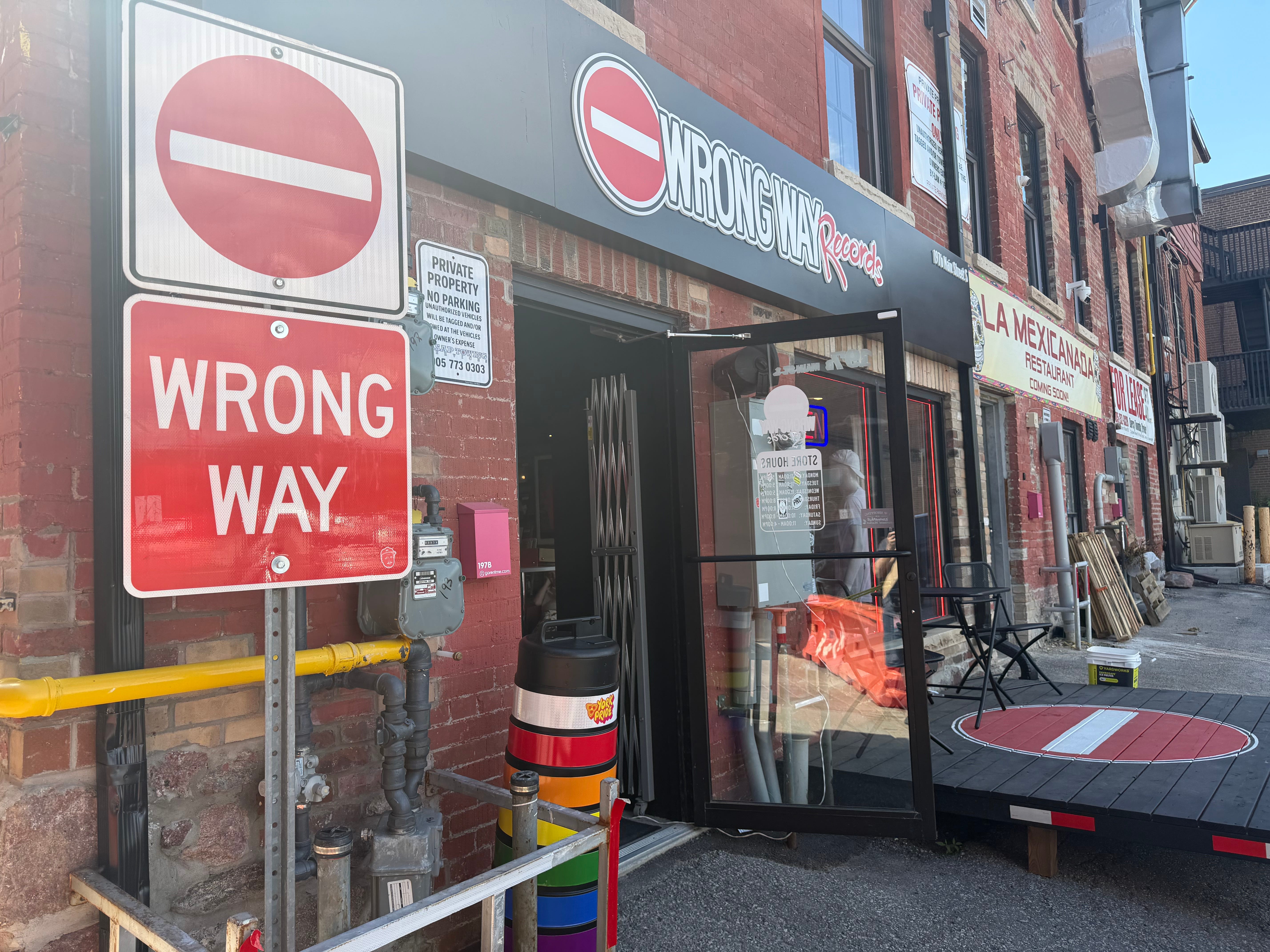
This morning I published an essay called The Lost Art of Saturday.
By mid-afternoon, I accidentally found myself conducting field research.
My wife was officiating a wedding at the Postmark Hotel in Newmarket. The hotel occupies the old post office building, which is fitting because it still serves much the same purpose. It once delivered letters. Today it delivers people to one another.
The wedding would take a couple of hours.
I had time to kill.
The modern solution would have been obvious.
Sit in the truck.
Turn on the air conditioning.
Scroll through my phone.
Read the news.
Become annoyed by people I have never met discussing problems I cannot solve.
Instead, I discovered that there was a record store a few doors away.
Even better, there was free parking behind it.
The old post office charged for parking.
The independent record store did not.
Already the afternoon was becoming educational.
The store was called Wrong Way Records.
As it turned out, it was exactly the right way.
I wandered through the bins.
I looked at old Monk records.
I inspected a near-mint Japanese pressing with an obi strip and a price tag that suggested the proprietor was either a serious collector or putting his children through university.
I discovered that an obi strip is essentially a decorative paper sash wrapped around Japanese records.
Collectors love them.
Economists are less easily impressed.
The obi does not improve the music.
It does not improve the pressing.
It does not improve the weather.
It simply increases the price.
I passed.
Then I found John Coltrane’s A Love Supreme.
I had been listening to it earlier in the afternoon.
The album had intrigued me.
Not because it was famous.
Not because critics adore it.
Because it felt like it was going somewhere.
At first it sounded like a man running to catch the last train.
Then came the chant.
Then the realization that perhaps the train had been caught and the destination reached.
The music raised questions.
Questions are usually a good sign.
So I bought the record.
I paid cash.
Not because I had to.
Because it felt appropriate.
A credit card would have been more efficient.
Apple Pay would have been faster.
But efficiency was not the point.
The entire afternoon resisted efficiency.
The wandering.
The browsing.
The conversation at the register.
The old memories.
The music playing through the store speakers.
The simple pleasure of being somewhere instead of merely consuming information about somewhere.
All of it felt connected.
The cash drawer was full.
Apparently I was not the only person participating in this peculiar ritual.
And that led me to a realization.
Economics would record exactly one thing from my visit.
A record sale.
Forty-six dollars and fifty cents.
Transaction complete.
But the transaction was the least important part of the experience.
The real value was in everything surrounding it.
The walk.
The discovery.
The conversation.
The memories.
The anticipation.
The listening.
The satisfaction.
None of that appears in GDP.
None of it appears in productivity statistics.
None of it appears in consumer spending reports.
Yet those things were the reason the transaction happened in the first place.
The record was not the product.
The afternoon was the product.
The record was merely the receipt.
What fascinated me most was the clientele.
The store was not filled with old men attempting to relive 1975.
Many of the customers were young.
Far too young to remember the era they were supposedly being nostalgic about.
They were buying Zeppelin.
Pink Floyd.
The Beatles.
Jazz.
Not because they remembered vinyl.
Because they were discovering something.
The album.
The uninterrupted experience.
The act of listening to forty minutes of music from beginning to end.
Streaming has won the battle for access.
Every song ever recorded now rides around in our pockets.
Vinyl no longer competes with that.
Instead, vinyl serves a different purpose.
Streaming is for the truck.
Vinyl is for the chair.
Streaming is for movement.
Vinyl is for arrival.
The truck is where I scout music.
The Beogram is where I live with it.
And perhaps that is why record stores continue to exist.
Not because people need records.
Because people need experiences.
A record store sells records.
But what people are really buying is discovery.
Connection.
Attention.
And occasionally a Saturday afternoon worth remembering.
I went to Newmarket to wait for a wedding.
I came home with a record.
But what I really purchased was a Saturday.
Bryan...Your essay hits me in a way I find hard to put in to words.
We built Wrong Way Records in an attempt to acheive everything you described as your experience. No marketing companies, no interior designers, no "influencers" (I did, however, start my first social media account in my 50's). My heart is full knowing that we must be doing something right.
Selling records is what we do to keep the doors open, but the shop is for connecting with people, music, and experiences. A place to put away your phone and live life live...you get it.
Ray~Wrong Way Records